
Luxury Packaging Boxes: Premium Designs for Brands
A strong product can still feel ordinary if it arrives in weak or plain packaging. Luxury packaging boxes help solve this problem by protecting the product and making the first impression feel premium. These boxes are useful for cosmetics, jewellery, perfume, candles, electronics, and high-end gift sets. They are made of stronger materials, with better printing and special finishes. For brands that need a sturdy, premium structure, Rigid Box Packaging is a practical option for comparing box styles, materials, and customisation choices. Here, we explain what luxury packaging boxes are, which styles and materials work best, what affects the price, and how to choose the right option for your brand.
Table of Contents
ToggleWhat Are Luxury Packaging Boxes?
Luxury packaging boxes are premium boxes designed to make a product look valuable and feel special. They typically use thick board, high-quality paper, clean printing, and finishes like foil stamping or embossing. Their main purpose is more than just holding a product. A luxury box also protects it, presents it well, and supports the brand image. Customers often keep these boxes because they look good and feel well made.
What Makes Packaging Feel Luxury?
Luxury packaging does not need to be loud or overly decorated. It usually feels premium because of a few simple details:
- Strong, sturdy materials that do not bend easily
- Clean design with enough space
- Clear logo and easy-to-read text
- Smooth surface finish
- A secure closure
- A fitted insert that holds the product in place
A simple black box with a small gold logo can feel more luxurious than a box covered in too many colours and effects.
Best Box Styles for Premium Products
The right box style depends on the product, budget, and customer experience you want to create.
Lid-and-Base Boxes
A lid-and-base box has a separate lid that lifts off the base. It is one of the most common luxury box styles because it is simple and works for many products.
This style is a good fit for candles, skincare sets, clothing, and gift boxes. It is also a smart choice for brands that want a premium look without making the packaging too complicated.
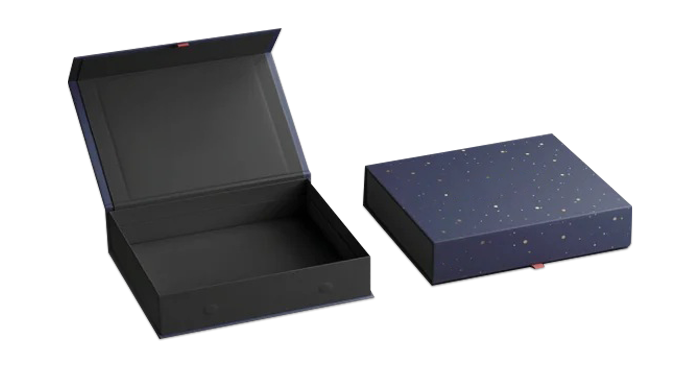
Magnetic Closure Boxes
A magnetic closure box uses magnets to keep the lid shut. It feels secure and high-end when the customer opens it. This style works well for jewellery, electronics, perfume, and premium gift sets. The main drawback is cost. Magnets, hinges, and extra assembly can raise the price, so it is best for higher-value products.
Drawer Boxes
A drawer box has an inner tray that slides out from an outer cover. It creates a nice reveal when the customer opens it. This style works well for beauty sets, chocolates, stationery, and small accessories. The box needs accurate sizing so the drawer slides smoothly and does not feel too tight or too loose.
Choosing the Right Materials
Material choice affects strength, appearance, cost, and how the box feels in the customer’s hands.
Rigid Board for Strength
Most luxury packaging boxes use rigid board, also called chipboard or greyboard. This thick board keeps the box firm and helps it hold its shape. Thicker board is better for heavy or fragile products. Thinner board can reduce weight and cost for smaller items, but it may not feel as premium.
Outer Wrap Options
The outer wrap is the visible surface of the box. Common options include:
- Coated art paper: Best for sharp images, bright colours, and detailed logos.
- Kraft paper: Gives a natural, simple, and eco-friendly look.
- Textured paper: Adds a premium feel and makes the box more interesting to touch.
- Specialty paper: Includes linen, metallic, or patterned paper for a distinctive look.
Coated paper is a safe choice for most brands. Textured or specialty paper can look more exclusive, but it may cost more and can limit very fine printing details.
Inserts for Protection
An insert keeps the product in place inside the box. It stops the product from moving around during delivery. Common insert materials include foam, moulded pulp, cardboard, satin, and velvet. Use foam or moulded inserts for fragile products such as glass bottles, ceramics, or electronics. These materials hold the product firmly and help protect it from damage. Use cardboard inserts for lighter products when you want a simple and more affordable option.
Printing and Finishing Options
Finishes add texture, shine, or protection to the box. They should improve the design, not make it look too busy.
Matte, Gloss, and Soft-Touch Finishes
A matte finish has a smooth surface with no shine. It looks clean and modern, and it hides fingerprints better than gloss.
A gloss finish makes colours look brighter and gives the box a shiny surface. It works well for colourful designs, but it can show fingerprints more easily.
A soft-touch finish feels smooth like velvet. Many brands use it for cosmetics, jewellery, and premium gifts because it makes the box feel more expensive.
Foil Stamping, Embossing, and Spot UV
Foil stamping adds a shiny metal colour, such as gold, silver, or rose gold, to selected areas. It works best for logos, borders, and short text. Embossing raises part of the design above the box surface. Debossing presses the design into the surface. Both create a texture that customers can see and feel. Spot UV adds shine to selected areas of the box. For example, a matte black box with a shiny logo can look stylish without using too many effects.
Read Also: Custom Advent Calendar Boxes
How to Design Luxury Packaging Boxes
A clear process helps you avoid sizing problems, weak structures, and costly changes.
- Measure the product. Record its length, width, height, and weight. Include any pouch, label, or accessory that will go inside.
- Choose the box style. Match the opening style to the product and the customer experience.
- Select the board thickness. Use thicker board for heavy or fragile products.
- Plan the insert. Decide whether the product needs foam, cardboard, fabric, or no insert.
- Prepare the artwork. Include your logo, product name, colours, and any required product information.
- Request a sample. Check the fit, closure, print quality, and overall feel before full production.
- Approve the final specification. Confirm the size, material, finish, quantity, and delivery details in writing.
A physical sample is important. A digital design cannot show how the box feels, how tightly the lid fits, or whether the insert holds the product securely.
What Affects the Cost?
Luxury packaging boxes usually cost more than standard folding cartons. The price depends on the materials, size, printing method, and extra features.
- Box size: Larger boxes need more material.
- Board thickness: Thicker board increases strength and cost.
- Order quantity: Larger orders often reduce the cost per box.
- Printing method: Full-colour printing costs more than simple one- or two-colour printing.
- Finishes: Foil, embossing, soft-touch coating, and spot UV add expense.
- Inserts: Foam and custom moulded inserts cost more than cardboard inserts.
- Closures: Magnets, ribbons, and special hinges increase material and assembly costs.
If your budget is limited, start with a simple lid-and-base box, matte finish, and cardboard insert. Add foil stamping or a magnetic closure later when the product has steady sales.
Common Mistakes to Avoid
Many packaging problems happen because decisions are made too late. Avoid these common mistakes:
- Designing the box before measuring the product. Always design around the real product and its accessories.
- Using too many finishes. One or two finishes usually look more premium than several competing effects.
- Choosing style over protection. A beautiful box still needs to protect the product during shipping.
- Ignoring storage and shipping space. Rigid boxes cannot fold flat, so they take more room in storage and delivery.
- Skipping the sample. Always test the box before placing a large order.
- Forgetting required labels. Some products need ingredient lists, safety warnings, batch numbers, or other required information.
When Luxury Packaging Is Worth It
Luxury packaging boxes are a good choice when a product costs more, needs extra protection, or is sold as a gift. They also work well for store displays, holiday collections, subscription boxes, and products that customers may want to keep in the box.
For low-cost and lightweight products sold in large quantities, a folding carton or corrugated mailer may be a better choice. But for premium products, a well-made luxury box can make the product look better, protect it during delivery, and help more people remember your brand.
Summary
If you are planning a premium product launch, gift set, or retail collection, PackagingDot can help you choose the right box style, material, finish, and insert. Share your product measurements, order quantity, budget, and design ideas. Then ask for a sample before you place a full order. The best luxury packaging boxes are not always the ones with the most decoration. The right box fits your product well, protects it during delivery, matches your brand, and makes customers feel happy and confident about their purchase.